

Manifold Times: Equatorial navigates through sanctions and green transition amid shifting bunkering landscape
Shipowners’ demand for ‘cheapest compliant fuel’ suggests a potentially more competitive and shrinking market for LSFO, forecasts Choong Sheen Mao, COO at Equatorial.
Singapore-based physical bunker supplier Equatorial Marine Fuel Management Services Pte Ltd (Equatorial) is adapting to a dynamic global bunker market shaped by regulatory shifts, geopolitical tensions, and the push for decarbonisation, states its Chief Operating Officer.
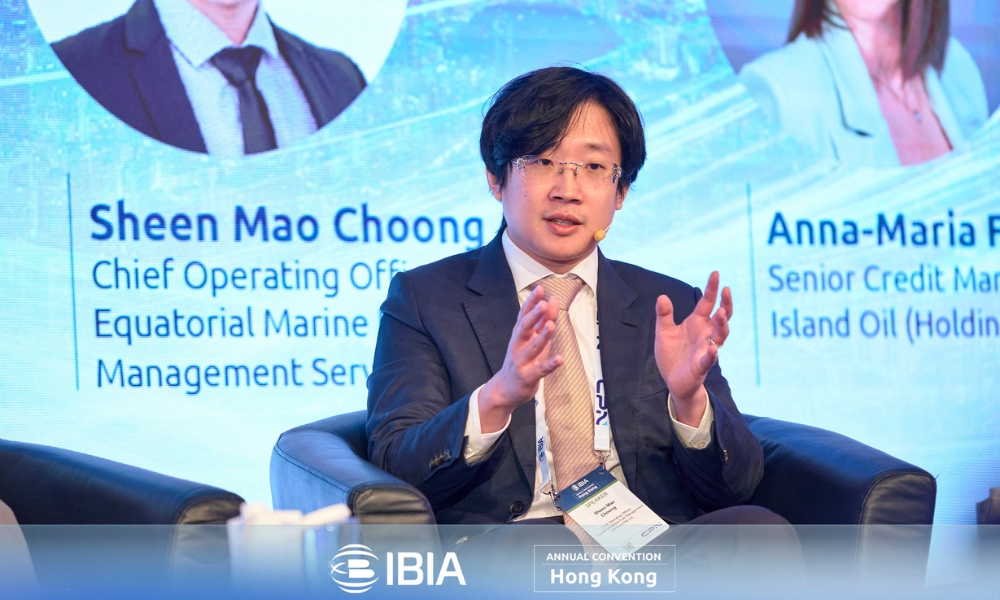
Choong Sheen Mao was amongst panellists of the Bunker Sellers Panel at IBIA Annual Convention 2025 in Hong Kong on Tuesday (18 November) when he shared a significant trend of shipowners increasingly opting for high sulphur fuel oil (HSFO) paired with scrubbers, driven by the pursuit of the “cheapest compliant fuel”.
Despite a narrowing spread between high and low sulphur fuels – from approximately USD 125 to USD 80, and occasionally below USD 70 – shipowners continue to see long-term investment returns from scrubbers. This shift suggests a potentially more competitive and shrinking market for low sulphur fuel oil (LSFO).
“Geopolitical instabilities, particularly armed conflicts, sanctions and trade wars, are creating considerable market distortions. These instabilities lead to supply disruptions, cargo rerouting, and impact bunker prices,” added Choong.
“Compliance has become a paramount concern, with recent substantial fines underscoring the risks involved. The current economic slowdown, compounded by sanctions and self-sanctioning, presents a ‘double pain’ for the market.
“The market’s daily volatility is also heavily influenced by global politics, making it challenging to assess without a deep understanding of geopolitical events.”
To ensure marine fuel quality, Equatorial emphasises managing its own supply chain and operating its own fleet of bunkering vessels, allowing for direct control from delivery to the customer, he stated.
This approach prioritises transparency and security, fostering long-term relationships where quality issues can be collaboratively addressed. Knowledge sharing, especially concerning parameters from new bunker fuel testing methods such as Gas Chromatography Mass Spectrometry (GC-MS), is also deemed crucial.
Supporting the transition to alternative marine fuels, while acknowledging the uncertainty surrounding the dominant future fuel, Equatorial has strategically invested in IMO Type 2 chemical tankers capable of handling methanol, biofuel, and conventional bunker fuels.
“Biofuel is identified as the most effective short-term solution, offering favourable pricing and operational costs compared to other green alternatives,” explained Choong.
“However, challenges include feedstock availability and potential export quotas from key producing nations like China.
“The adoption of alternative marine fuels necessitates a closer, more collaborative relationship between buyers and sellers.
“This involves detailed discussions on specific fuel specifications beyond standard ISO requirements, extensive lab sampling, and long-term commitments from both parties, particularly given the absence of a liquid hedging market for biofuels.
“Collaboration across safety, quality, and commercial aspects is essential for the successful implementation of bio bunker fuels to the future maritime market.”
Read the original article here: https://www.manifoldtimes.com/news/equatorial-navigates-through-sanctions-and-green-transition-amid-shifting-bunkering-landscape/