Sustainable Energy for Alternative Marine Fuels Developments
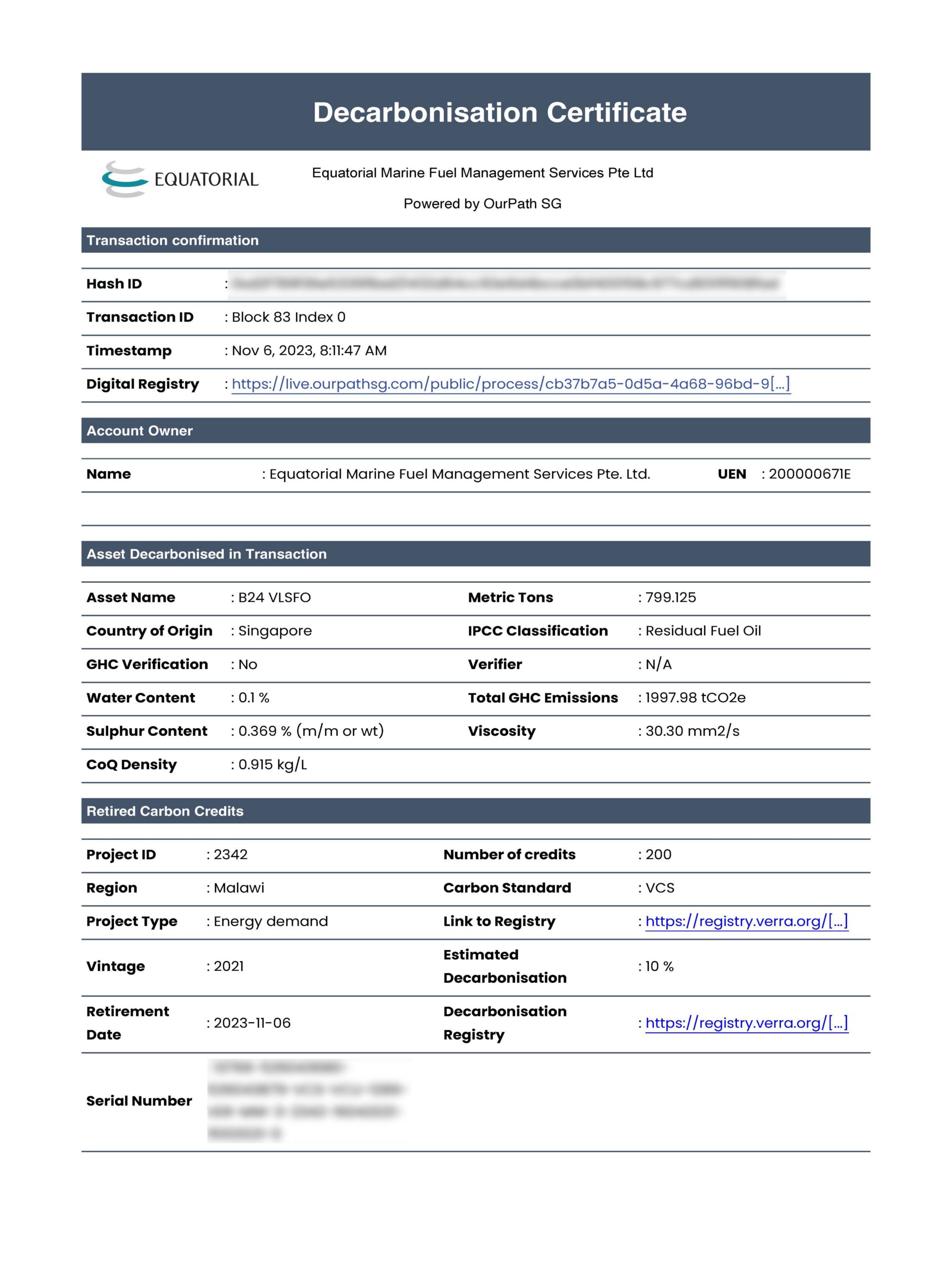
At Equatorial, we are committed to driving the maritime industry’s decarbonization through innovative solutions. We invest in alternative fuels like LNG, methanol, and ammonia, provide certified sustainable biofuels (B24 to B100), and offer carbon credits to help customers achieve carbon-neutral operations. With plans to renew our fleet for greener capabilities and align with global ESG goals, we deliver sustainable bunkering options that meet evolving regulations while supporting our clients in reducing emissions and operational costs. Together, we navigate the path to a cleaner, greener maritime future.

LNG

Biofuels

Methanol

Ammonia








Reduction of GHG emissions
The new regulations apply to all ships above 5,000 GT, except ships trading solely domestically and platforms including FPSOs, FSUs and drilling rigs, and semi-submersible vessels.
The requirements are based on a GHG fuel intensity (GFI) metric, which is the well-to-wake GHG emissions per unit of energy used on board a ship. This also includes electricity delivered to the ship, wind propulsion and solar power. The attained GFI is to be reported annually by the ship as part of the DCS.
Two tiers of requirements are set on the annual attained GFI for a ship: a Base target and a more stringent Direct Compliance target. Each ship is required to meet the Direct Compliance target. The regulations include annual GFI reduction factors to 2035, as shown in the table and figure below.
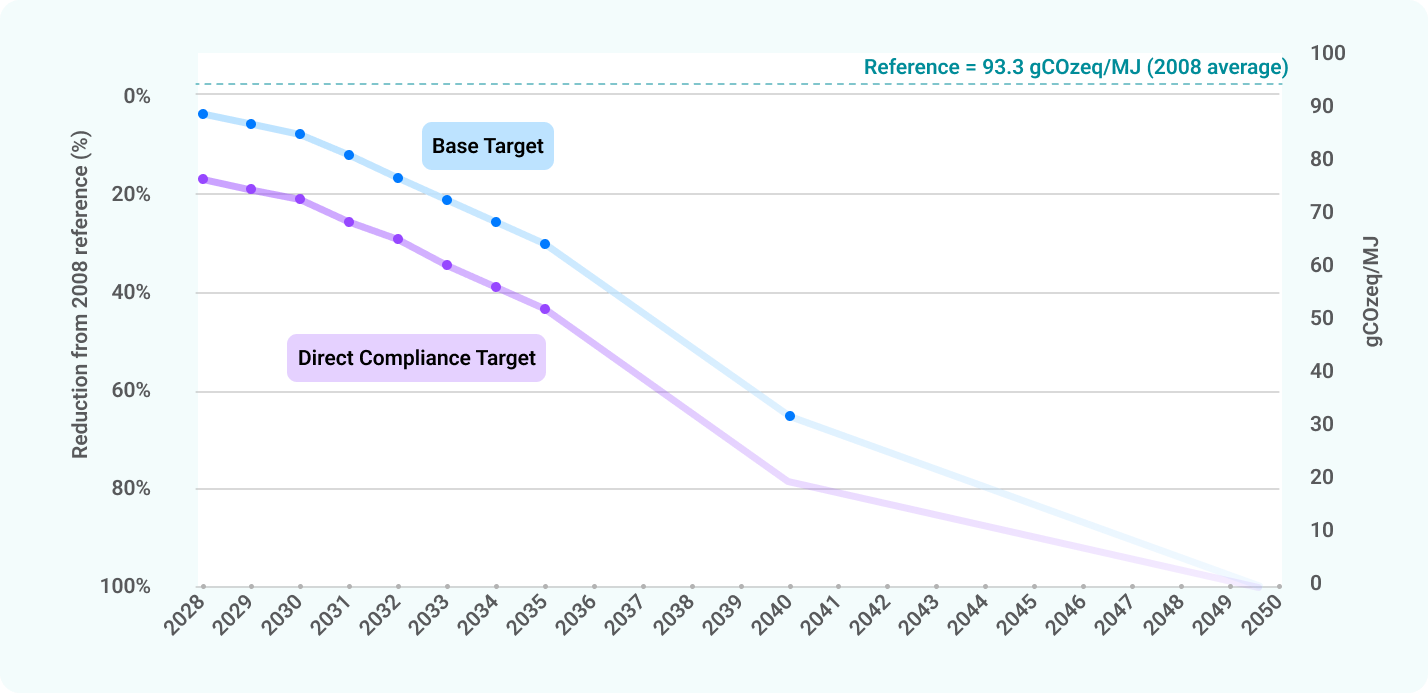
| Year | 2028 | 2029 | 2030 | 2031 | 2032 | 2033 | 2034 | 2035 |
|---|---|---|---|---|---|---|---|---|
| Base | 4% | 6% | 8% | 12.4% | 16.8% | 21.2% | 25.6% | 30% |
| Direct | 17% | 19% | 21% | 25.4% | 29.8% | 34.2% | 38.6% | 40% |
These measures, set to be formally adopted in October 2025 before entry into force in 2027, will become mandatory for large ocean-going ships over 5,000 gross tonnage, which emit 85% of the total CO2 emissions from international shipping
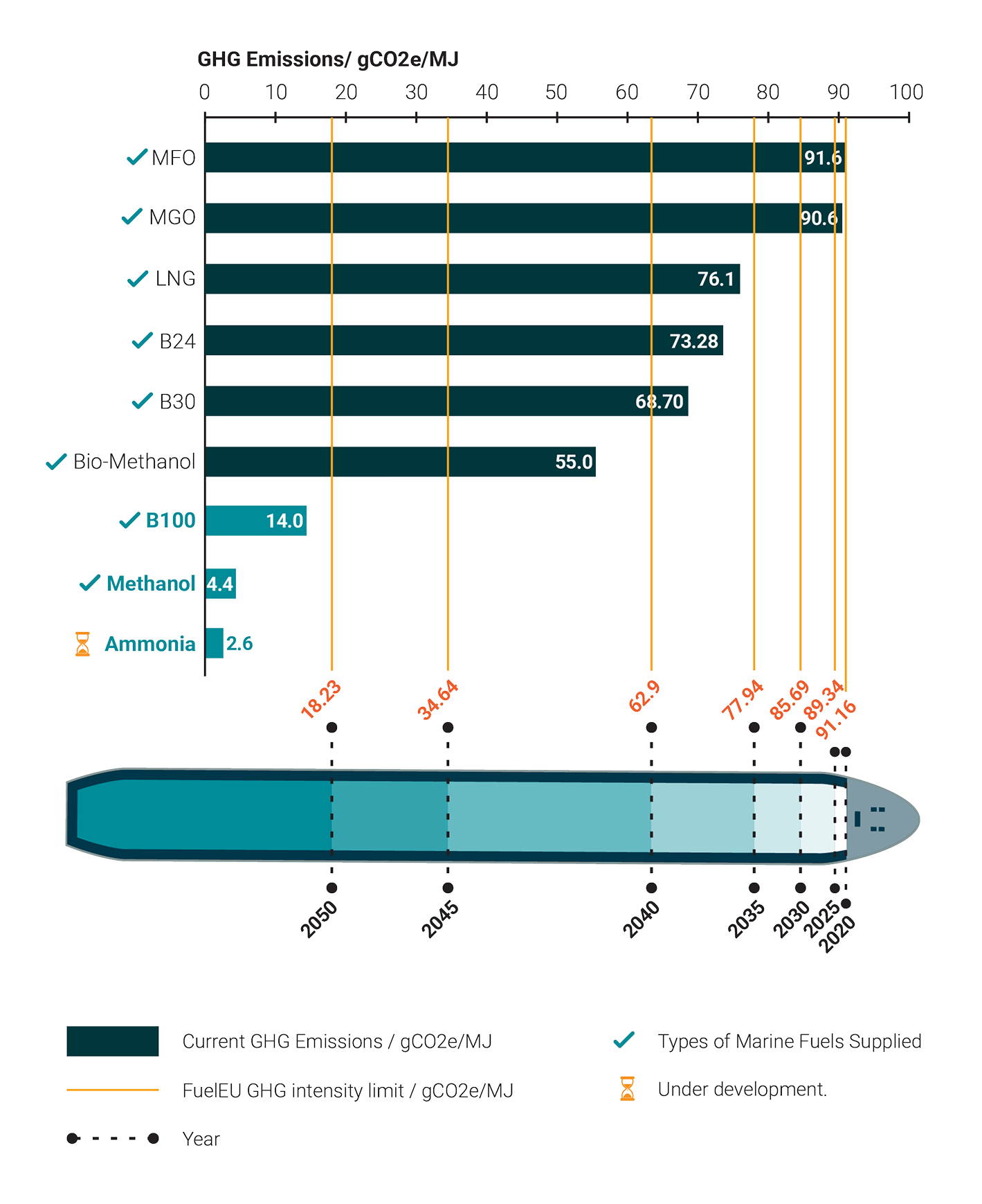
Alternative Fuels to meet FuelEU Maritime till 2050
Equatorial’s vision for a sustainable multi-fuel future is in tandem with latest global developments such as IMO MEPC updates, EU ETS and FuelEU Maritime as illustrated above. This allows Equatorial to not only effectively support our customers, but also provides authentication on our contributions to the maritime industry’s efforts to decarbonise and combat climate change.
Decarbonisation Journey
Equatorial is committed to a multi‑fuel future and maritime decarbonization, with a dedicated sustainable energy unit focused on low‑ and zero‑carbon marine fuels such as LNG, biofuels, methanol, ammonia, and hydrogen. We currently supply ISCC‑certified B100 biofuel and continue to expand our sustainable fuel portfolio.
In parallel, we are investing in methanol‑ready bunker vessels and developing ammonia bunkering solutions to support the industry’s energy transition. In response to global developments, including Singapore’s multi‑fuel strategy and IMO’s tightening emission requirements, Equatorial delivers a range of green fuel solutions to meet evolving customer and regulatory needs.
Approvals and Certificates
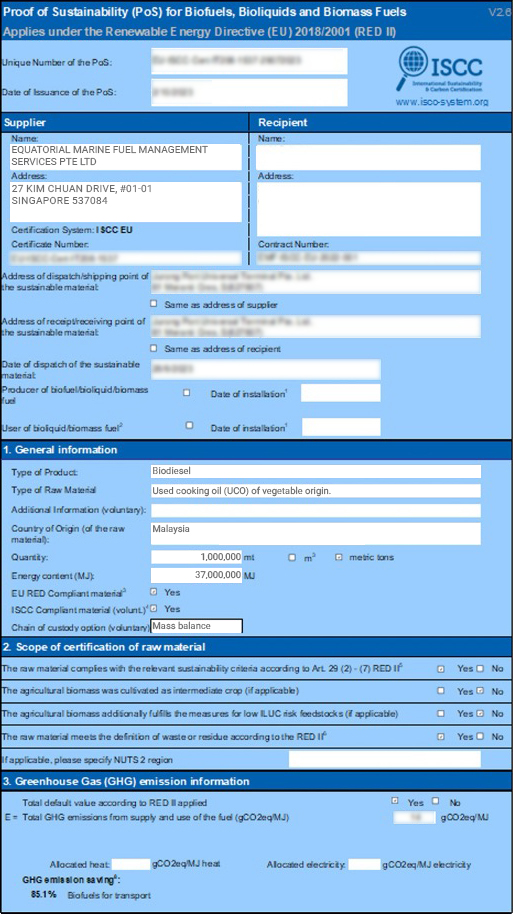
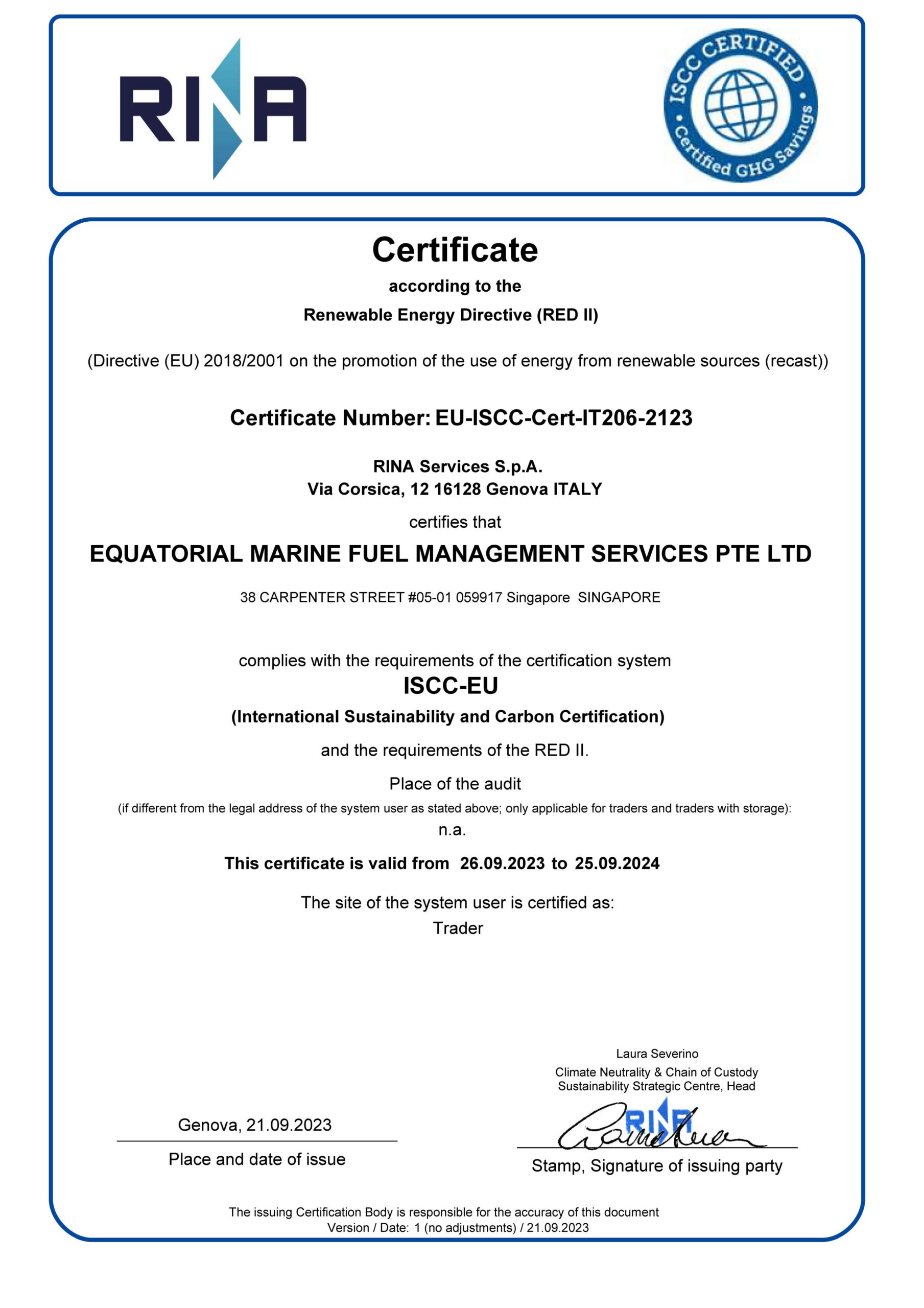
Equatorial operates with certifications from leading industry bodies, including the ISCC, ensuring adherence to high standards of quality and sustainability. We offer a range of compliant marine biofuels (B5 to B24) and meet ISO 8217 specifications.