Interview: Singapore’s EMF advances LNG bunkering plans, aims to receive vessel by Q3 2027
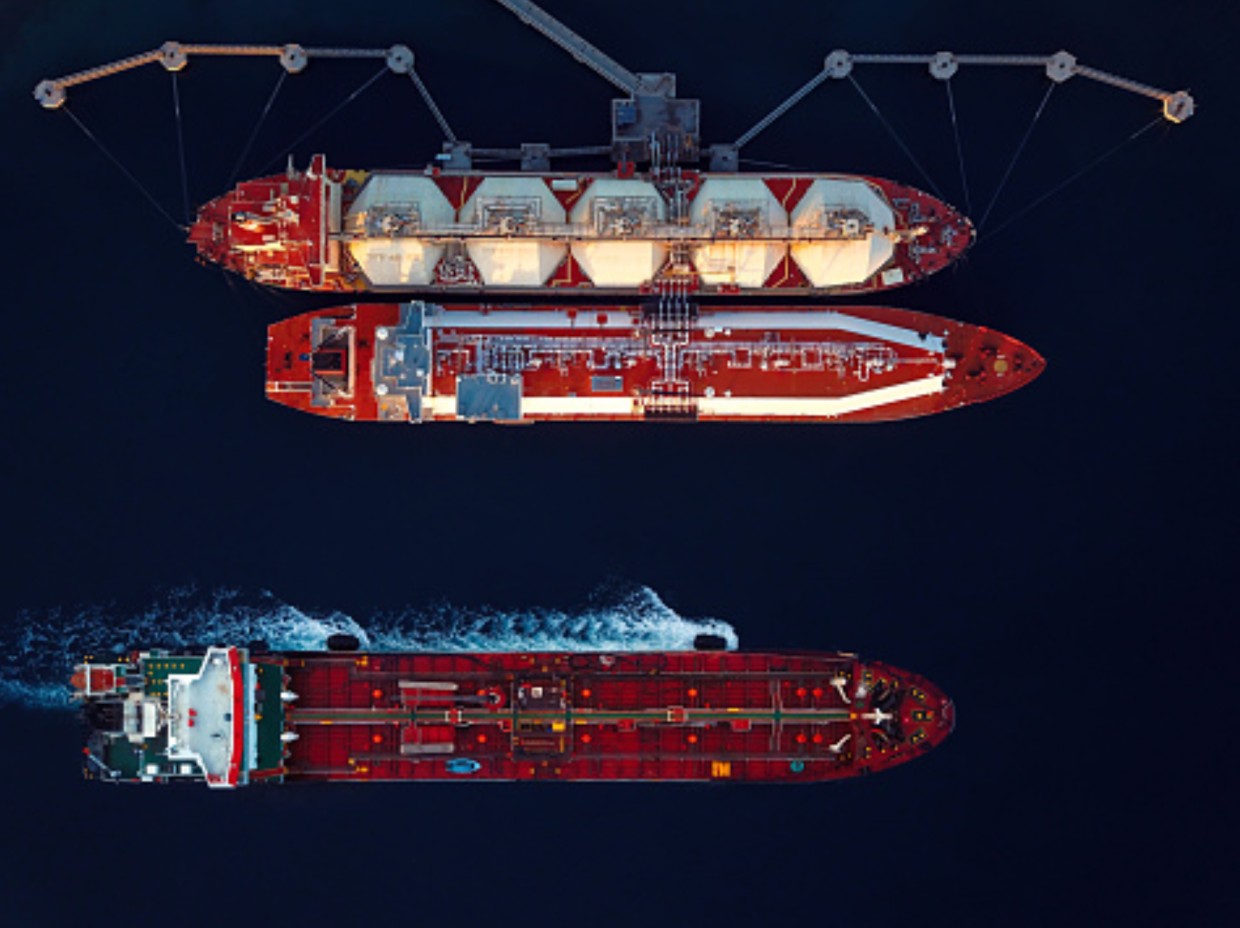
Singapore’s Equatorial Marine Fuel Management Services aims to receive its 20,000 cubic meters LNG bunkering vessel by the third quarter of 2027, as it advances LNG refueling plans after the Maritime and Port Authority of Singapore announced the planned issuance of a new license to the company, EMF Director Sheen Mao Choong told Platts, part of S&P Global Energy, in an interview.
In addition to its planned LNG bunkering vessel, EMF is also exploring other complementary arrangements to optimize its LNG bunkering services, Choong told Platts.
On July 30, the MPA announced it will issue eight new licenses to supply LNG as a marine fuel in Singapore, with the licenses valid from Sept. 1, 2026, to Aug. 31, 2031, subject to the licensees meeting the relevant licensing conditions. EMF is among the eight successful applicants, the MPA shared at the time.
EMF ranked as the country’s top marine fuel supplier by sales volumes in both 2022 and 2023, according to data from the MPA. Since 2024, MPA has presented the top 10 suppliers in alphabetical order, and EMF has featured in the list for 2024 and 2025, according to the EMF website.
According to Choong, the market is ready for additional players to come in. The move will augment LNG infrastructure development and strengthen the provision of LNG bunkering services in the world’s largest bunkering port, Choong said.
LNG offers an immediate route to decarbonization and remains the marine fuel of choice, with its popularity reflected in the global order book, according to Choong.
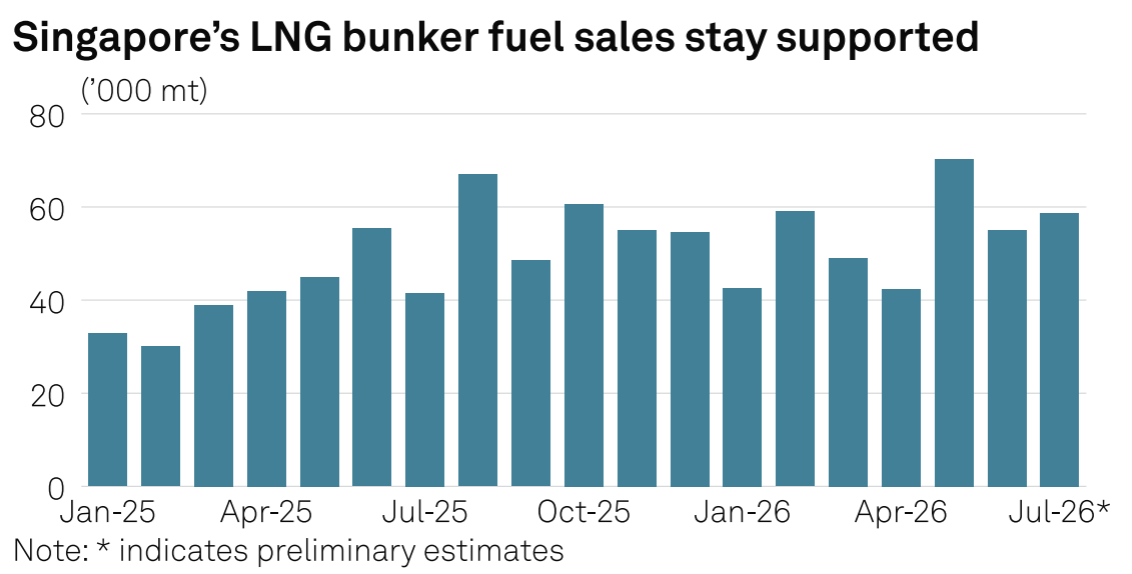
Source: Maritime and Port Authority of Singapore
A total of 137 alternative-fuelled ships were ordered in the first half of 2026, of which 73 were LNG-powered, reflecting the fuel’s role as the leading near-term option, global classification society DNV said in a statement July 2, citing data from its Alternative Fuels Insight platform.
Paying heed to the oil and gas price volatility due to current global geopolitics, including the Hormuz supply disruptions, Choong noted that elevated LNG prices had prompted some shipowners to switch to conventional fuels. However, Choong said that LNG bunker prices are set to be pressured once more LNG supply comes online globally.
“Prices will come down in the long run, and that is already getting reflected in the futures market,” Choong said.
According to Choong, the newbuild order book for LNG-powered ships is expected to be strong as shipowners have the flexibility to opt for conventional fuels amid potential gas price spikes, and vice versa.
Platts, part of S&P Global Energy, assessed the FOB Singapore Marine Fuel 0.5% sulfur cargo at $740.62/mt, the Singapore-delivered 380 CST bunker fuel at $656/mt, and LNG bunker Singapore at $1,309.152/mt Aug. 25.
Forging ahead
EMF presently owns and operates about 20 bunker vessels, Choong said.
As part of its fleet renewal program, EMF has had newbuilds replace its older tonnage, with its fleet size remaining mostly steady year over year, Choong said. While the company is foraying into LNG bunkering, it is fuel agnostic, Choong added.
According to Choong, biofuels are a very attractive bunkering option as they can be supplied by tapping existing bunkering infrastructure, storage, and bunkering vessels.
EMF has strategically invested in IMO Type 2 chemical tankers, enabling the company to move from B30 to B100 bio-bunker fuel deliveries. These tankers are also capable of transporting methanol, Choong continued.
According to Choong, methanol is another promising marine fuel, with its bunkering prospects further strengthened globally by the arrival and understanding of ethanol.
EMF is also participating in Singapore’s initiatives to develop low- and zero-carbon ammonia bunkering supply chain solutions, as the country embraces a multi-fuel future, Choong said, highlighting how the company must remain agile to customer needs as new alternative fuels develop.
“We must react because it could be a bit too late if we have not actually considered the needs of the future,” he said.
For example, the company is also looking at opportunities such as carbon offsetting and the impact of carbon penalties, he said.
Despite global macroeconomic headwinds and geopolitical uncertainty, Singapore’s bunker fuel sales are expected to remain resilient.
Singapore is the world’s largest bunkering port. Marine fuel sales at Singapore hit an all-time high of over 56 million metric tons in 2025 amid record port activity, according to MPA data.
“I have strong faith in the Singapore bunker industry to command high volumes this year too,” Choong said.
Singapore has an extremely strong marine ecosystem and government support, Choong noted. Its geographic location, bunker fuel quality, assured quantity, and competitive prices will continue to support it as a major global bunkering hub, he continued.
Meanwhile, Choong highlighted the need to expedite the implementation of uniform environmental regulations in international shipping.
At the 84th session of the International Maritime Organization’s Marine Environment Protection Committee, or MEPC 84, further discussion took place on the mid-term GHG reduction measures, with the Committee expected to further debate the Net Zero Framework at the next MEPC meeting.
“I hope everyone can reach a consensus sooner rather than later. I think it’s a regulation that’s meant to be for the good of the world,” Choong added.
Source: S&P Global Energy, ©2026 by S&P Global Inc.